
Invited Talk by Prof. Shlomo Havlin, on June 30, at TU Delft
General Theory and Novel Mechanism for Abrupt Phase Transitions based on Network Theory
Speaker: Prof. Shlomo Havlin, Bar-Ilan University
Date: June 30, 2026
Time: 11:00
Location: TU Delft Echo Arena
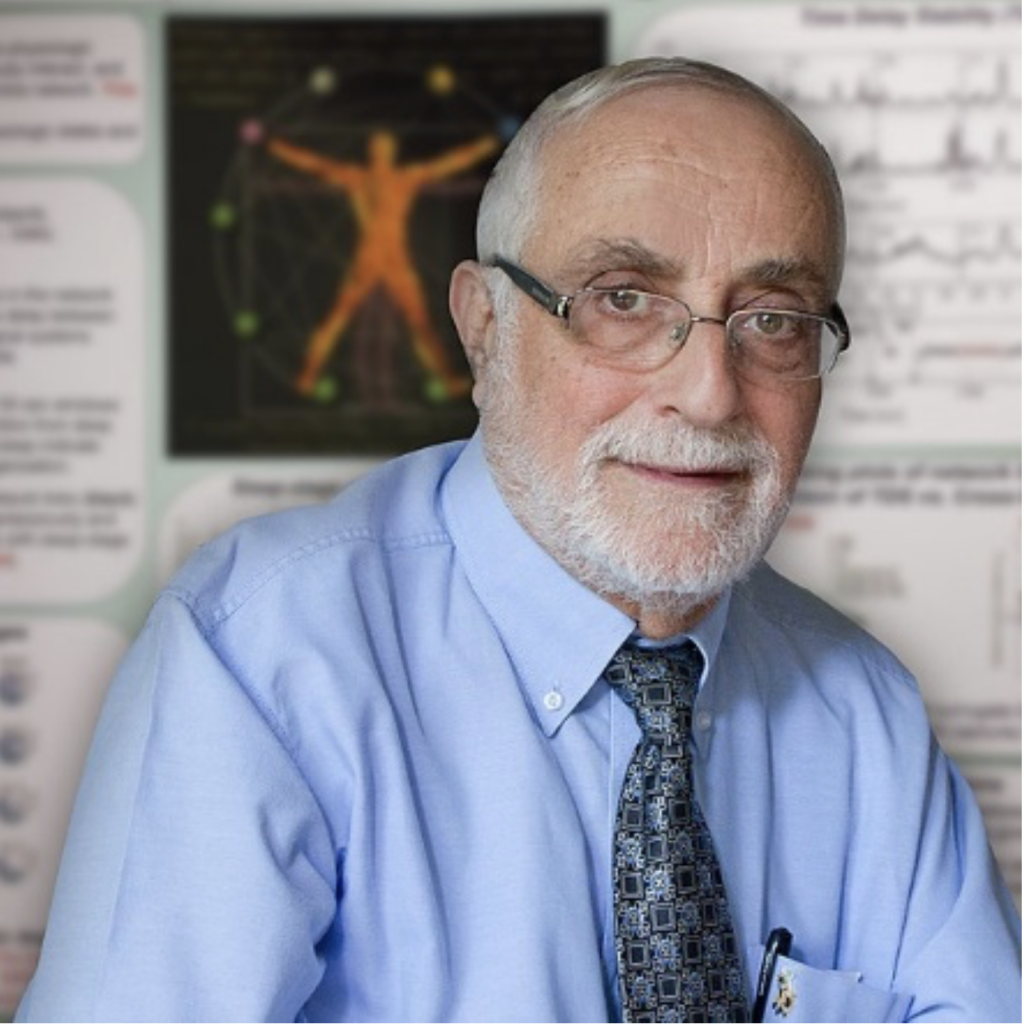
About the Speaker
Prof. Shlomo Havlin has made fundamental contributions to the physics of complex systems and statistical physics. His discoveries have influenced many fields, including medicine, biology, geophysics, and network science.
He has received numerous honors, including the Bakhuis Roosenboom Medal of the Royal Society of the Netherlands in 2023, the Israel Prize in Physics in 2018, the Order of the Star of Italy from the President of Italy in 2017, and the Lilienfeld Prize from the American Physical Society in 2010.
Prof. Havlin is a pioneer in the development of network science. Over the past 17 years, his research has focused on interdependent networks, cascading failures, abrupt transitions, networks of networks, and their applications to real-world systems. His work also includes experimental discoveries in interdependent superconducting networks and coupled laser systems.
Abstract
Phase transitions are fundamental phenomena in statistical physics and condensed matter, appearing as abrupt or continuous changes in the properties of a system. In this talk, Prof. Havlin will show how the theory of interdependent networks can identify novel microscopic mechanisms behind abrupt first-order nucleation and mixed-order phase transitions.
Interdependent networks appear throughout nature and technology, including physiological systems in the human body and infrastructure systems. The talk will present a theoretical framework for the percolation theory of interdependent networks.
In interdependent networks, such as infrastructure systems, when nodes in one network fail, they can cause dependent nodes in other networks to fail as well. This process may repeat recursively, leading to cascading failures and the sudden fragmentation of the system. This behavior contrasts with single networks, where the percolation transition caused by failures is continuous.
Prof. Havlin will present analytical solutions based on percolation theory for functional networks and cascading failures in a system of n interdependent networks. These results show that the traditional percolation theory of a single network, studied for more than 90 years, is only a limited case where n = 1. The more general case, where n > 1, is significantly richer.
The talk will also show that interdependent networks embedded in space are extremely vulnerable and display much richer behavior than non-embedded networks. Finally, Prof. Havlin will discuss how this abstract theory and its novel behavior in networks of networks have been realized and proven in controlled experiments on interdependent superconducting networks and coupled laser systems.